If you’ve spent any time on the Danforth, you already know the stretch near Broadview gets called Greektown and gets most of the attention. Keep walking east past Pape Avenue, though, and the street changes character. This is Danforth Village, and it’s one of the quieter pockets of East Toronto where families are still finding room to grow into a house instead of a condo.
Here’s what it actually looks like to live here, what homes are going for, and what’s worth knowing before you start looking.
A Neighbourhood Built on the Don
Danforth Village traces back to Todmorden, named for the paper mills that once ran along the Don River. Danforth Avenue itself dates to 1851, built by the Don and Danforth Plank Road Company to connect Toronto out to Danforth Road. The street didn’t actually get much of its development until the 1920s, when the Prince Edward and East York-Leaside viaducts opened up the area for subdivision.
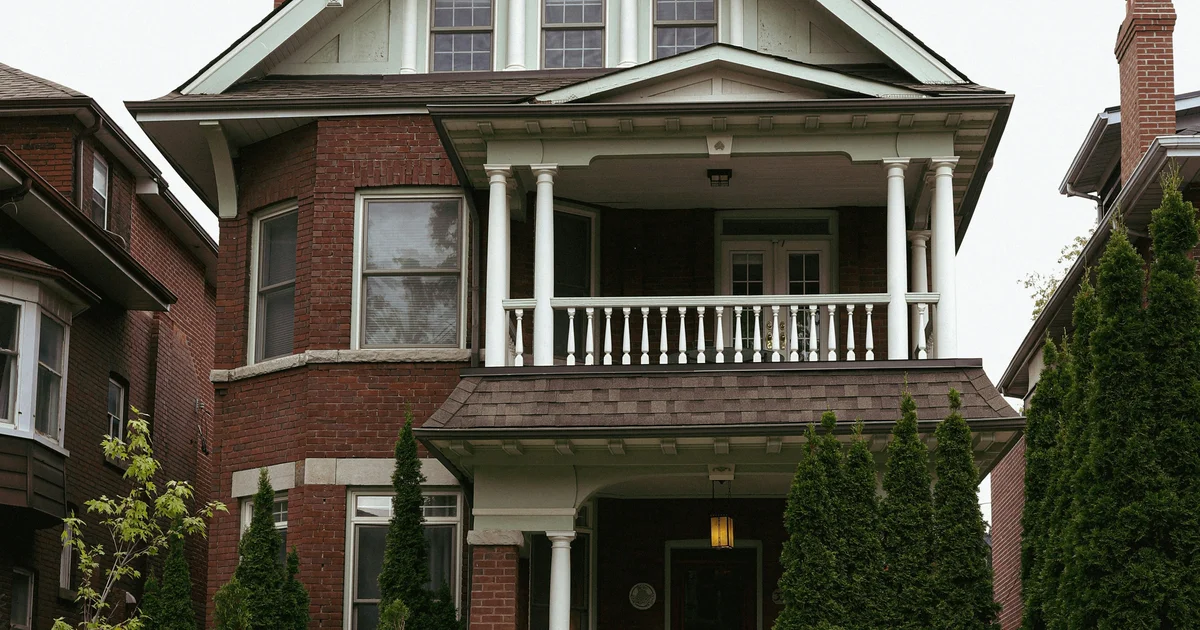
That history shows up in the housing stock today. Most of what you’ll find was built between 1910 and 1940: two-storey brick semis with a front porch, a narrow lot, and a long backyard that often runs to a laneway. There are renovated detached homes and the occasional bungalow mixed in, plus a fair number of fixer-uppers for buyers who want to put in the work.
What Homes Are Going For
As of this fall, the average detached or semi home in Danforth Village is priced around $1,206,180, and condos average $615,235, or about $880 per square foot. Listings are running from roughly $799,000 up to $2.3 million depending on size and condition.
The pace is worth paying attention to. Close to a third of homes here sell in under 10 days, and more than 4 in 10 sell above asking, both ahead of the Toronto city average. Median time on market sits around 19 days. Housing stock leans heavily toward semis, at just over half of everything on the market, with detached homes making up most of the rest.
None of that is a guarantee for any specific property. Danforth Village sits within Toronto’s broader East End market, and pricing always depends on lot size, condition, and what’s happening street by street. If you’re weighing a purchase here against Leslieville, Riverside, or The Beaches, the biggest difference you’ll feel is space for the price. Semis and detached homes are more common here, where those neighbourhoods lean harder toward smaller lots, infill, and lakefront premiums.
Getting Around
Transit is one of the strongest arguments for this stretch of the Danforth. Line 2 runs right through it, with Pape, Donlands, and Greenwood stations all wheelchair-accessible and spaced roughly a five-minute walk apart. Most homes in the neighbourhood are a short walk from at least one station. There’s no local streetcar service, so the subway does the heavy lifting here.
Schools and Green Space
Families have real options. There are roughly a dozen public schools serving the area, including Earl Haig Public School for junior grades and Danforth Collegiate and Technical Institute for high school, along with several Catholic school options like St. Brigid. Some local schools also offer IB, French Immersion, and gifted programming, so it’s worth checking which programs are available at your specific catchment school.
For green space, Todmorden Mills Park is the standout: 9.2 hectares along the Don River with a wildflower preserve, walking trails, forest and meadow areas, and a small museum on-site. Monarch Park is also nearby, giving the neighbourhood a couple of solid options without needing to leave the area.
Where to Eat and Shop
The commercial strip here splits into two distinct pockets. Along Danforth Avenue itself, near the Pape, Donlands, and Greenwood stations, you’ll find a mix that includes Simone’s Caribbean Restaurant, Sala Modern Thai Kitchen, Morgans, RUDY for burgers, The Wren, and Mezes for Greek sharing plates, plus the LCBO at Danforth and Greenwood.
North of the avenue, Pape Village runs along Pape Ave between Mortimer and Gamble, home to around 110 businesses under its own BIA. It’s a mixed strip of bakeries, small restaurants, and personal-service shops with a strong Greek-speaking history that’s grown more diverse over the years. It has its own identity distinct from the Danforth strip itself, even though the two are only a block or two apart.
How Danforth Village Compares to Its Neighbours
It’s easy to lump this whole stretch in with Greektown, but they’re genuinely different areas. Greektown proper runs roughly from Chester to Dewhurst, west of Pape Avenue, and is the largest Greek community in North America, with the restaurant density and street festivals to match. Danforth Village, running from Greenwood east to Victoria Park, is more residential and less centred on any one cultural identity the further east you go. Pape Village, tucked just north of Danforth Ave, keeps its own distinct Greek character as a smaller, separate pocket.
To the north, Playter Estates has a different feel entirely: multi-million-dollar Edwardian homes, a growing mix of artists and professionals, and a noticeably more upscale market than the modest brick semis that define Danforth Village closer to the avenue. Street names like Glebemount and Glebeholme are a leftover from the area’s original ownership by the Church of England, while land south of Danforth Ave was historically held by farming and brick-making families, a detail that still shapes some of the older lot layouts you’ll see today.
What’s Changing in the Neighbourhood
The City of Toronto has been running a streetscape upgrade project along Danforth Avenue since early 2026, covering underground infrastructure renewal along with improvements to TTC platforms, on-street parking, and cycling infrastructure. As of this fall, that project is nearing its wrap-up rather than still in its early stages.
There’s also proposed development worth knowing about, though none of it is built or approved yet. A redevelopment proposal for the former Little York Hotel site, between Dawes Road and Main Street, went to a public meeting in mid-2025 and would combine 4- and 8-storey residential buildings with a heritage building reconstruction. Separately, a developer has proposed a larger project further along Main Street with towers in the 30- to 39-storey range. Both are still working through the city’s planning process, so treat them as signs of investor interest in the area rather than anything settled. If you’re buying with an eye on how the neighbourhood might change, it’s worth checking the City of Toronto’s planning portal for the latest status before you make assumptions either way.
Who’s Buying Here
The buyers we see most in Danforth Village are people moving up from a downtown condo who want more space and more equity for their money in a detached or semi-detached home. The area’s proximity to Michael Garron Hospital, Stan Wadlow Park, and the mixed dining and retail along the Danforth adds to the appeal. With fast sales cycles and a solid rate of above-asking offers, it’s also a neighbourhood that draws attention from first-time buyers and investors alike, though as with any market, timing and condition matter as much as the address.
If you’re buying here for the first time, two things are worth reading before you go any further: whether you qualify for the Toronto land transfer tax rebate, and what a mortgage pre-approval actually guarantees before you start touring homes.
Get monthly market updates.
Once a month I send a short breakdown of what’s selling, what’s sitting, and what it’s actually going for. No fluff, just the numbers.
Frequently Asked Questions About Danforth Village
Where is Danforth Village in Toronto?
Danforth Village runs along Danforth Avenue roughly from Greenwood Avenue east to Victoria Park Avenue, in Toronto’s East End. It’s east of Greektown and south of Playter Estates, with Line 2 subway access at Pape, Donlands, and Greenwood stations.
Is Danforth Village the same as Greektown?
No. Greektown proper sits further west, roughly between Chester and Dewhurst, and is the largest Greek community in North America. Danforth Village is a more residential stretch further east, though Pape Village, just north of the avenue, keeps its own distinct Greek character as a smaller pocket within the broader neighbourhood.
What are home prices like in Danforth Village?
As of fall 2026, average pricing sits around $1,206,180 for houses and $615,235 for condos, with listings ranging from roughly $799,000 to $2.3 million. Homes here sell faster than the Toronto average, with close to a third selling in under 10 days.
What transit serves Danforth Village?
Line 2 of the TTC subway runs directly through the area, with Pape, Donlands, and Greenwood stations all within walking distance of most homes. There’s no streetcar service along this stretch of the Danforth.
Is Danforth Village a good place to raise a family?
It has the fundamentals: roughly a dozen public schools plus several Catholic options, some with IB, French Immersion, or gifted programming, along with green space at Todmorden Mills Park and Monarch Park. Just under half of households in the area are families with kids, so it’s a well-established family neighbourhood.
Is anything being built or changing in Danforth Village right now?
The city’s streetscape upgrade along Danforth Avenue is nearing completion after running since early 2026. There are also a couple of development proposals in the area, including a mid-rise project near Main Street and Dawes Road and a larger residential proposal further along Main Street, though both are still moving through the city’s planning process and aren’t approved or built yet.
Thinking About Danforth Village?
If any of this has you curious about what’s actually available right now, or what your budget could get you in this part of East Toronto, reply to this post or book a free call with me and I’ll walk you through it. I read every message myself, and you can always browse more of my East Toronto real estate guides while you’re at it.
Data in this post reflects market conditions as of fall 2026 and is sourced from public real estate listing data, the City of Toronto, and neighbourhood research. Figures can shift, and individual property pricing depends on condition, lot size, and timing. Always confirm current numbers with your realtor or lender before making a decision.